The Odyssey – Review
Even after the war ends… some journeys never do.
That is precisely what Christopher Nolan conveys on a grand scale with The Odyssey. Rather than treating Homer’s thousand-year-old epic as just another mythological adventure, he transforms it into a deeply emotional human story about guilt, loss, redemption, and family.
Having explored memory in Memento, dreams in Inception, time in Interstellar, and conscience in Oppenheimer, Nolan now turns his attention to the journey of a man trying to return home. But this isn’t merely the story of a king finding his way back to his kingdom; it is the story of a man finding his way back to his own conscience.
Set after the Trojan War, the film follows Odysseus, the King of Ithaca, on his decade-long voyage to reunite with his wife Penelope and son Telemachus. Along the way, he faces furious gods, monstrous creatures, seductive Sirens, enchanted lands, and the relentless fury of the sea. Yet none of these prove to be his greatest enemy. The haunting memories of the countless lives lost in war and the crushing burden of guilt he carries as the price of victory continue to pursue him throughout his journey.
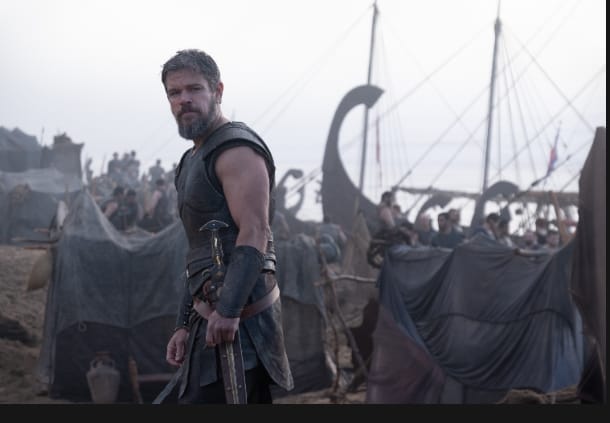
Matt Damon delivers what may well be the finest performance of his career as Odysseus. He effortlessly embodies the many layers of the character—the courage of a legendary warrior, the longing of a husband, the tenderness of a father, and the emotional scars of a battle-weary soldier. In many of the film’s intimate moments, his eyes communicate more than words ever could.
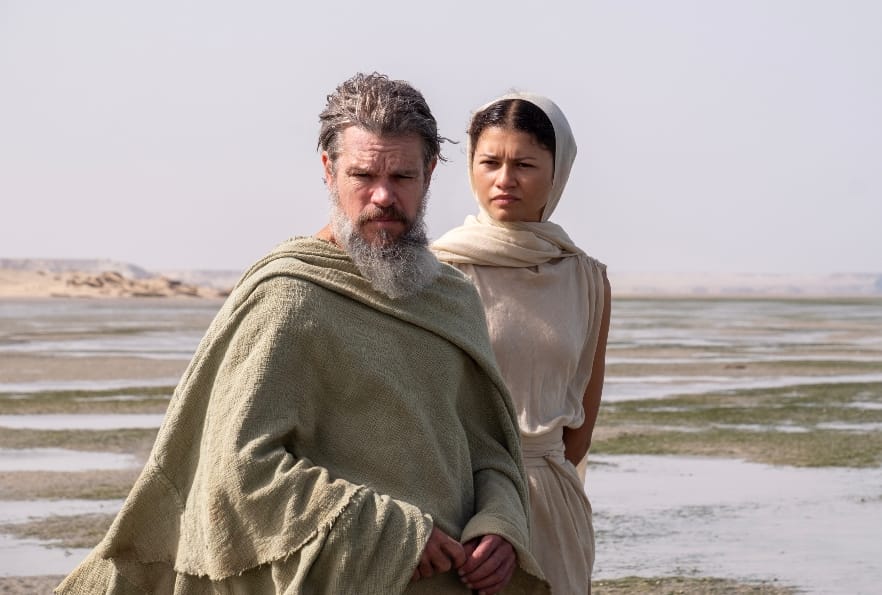
Anne Hathaway brings remarkable grace and quiet strength to Penelope. She is not merely a faithful wife waiting for her husband, but a queen determined to preserve the dignity of her kingdom. Tom Holland steps far beyond his familiar youthful charm to deliver a mature and compelling performance as Telemachus, a young prince struggling to shoulder responsibility. Robert Pattinson makes Antinous a character audiences will genuinely despise, while Zendaya, Charlize Theron, and Lupita Nyong’o leave lasting impressions despite their limited screen time.
There is little left to say about Nolan’s mastery of visual storytelling, but The Odyssey elevates it to another level. The raging seas, the terrifying Cyclops, the mesmerizing realm of the Sirens, and Circe’s mysterious island all feel as though they were created specifically for the IMAX screen. Filmed entirely with IMAX 70mm cameras, the film delivers a breathtaking cinematic spectacle that fully justifies its scale.
Hoyte van Hoytema’s cinematography turns every frame into a work of art, while Ludwig Göransson’s magnificent score amplifies every emotional beat. Particularly during Odysseus’ struggle with the memories of war, the music becomes a powerful storyteller in its own right.
If there is one criticism, it is that the middle portion of the film occasionally loses momentum. Odysseus’ long journey can sometimes test the audience’s patience as well. However, the breathtaking visuals and emotionally satisfying climax more than compensate for these minor shortcomings.
Overall, The Odyssey is far more than a cinematic adaptation of a timeless epic. It is a magnificent exploration of the idea that the greatest battle a person fights is not against enemies on the battlefield, but against the weight of their own conscience. With this film, Christopher Nolan has reached yet another remarkable peak in his extraordinary filmmaking career.
“A breathtaking epic for the eyes… a deeply moving human story for the heart.”